Learning Experience Design
Learning built to fit the conditions the learner is actually in: ten minutes on a phone, standing on a sales floor, in one of thirty languages.

Product-launch eLearning and performance support: translating marketing into what a salesperson can say
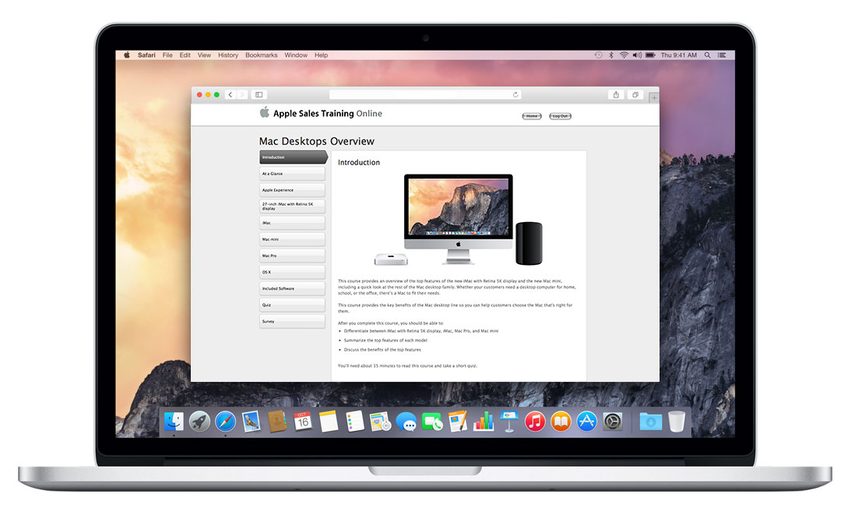
For much of my time at Apple I designed and built the eLearning that shipped to the channel salesforce with each product release, often within days of availability: feature overviews, key messages, and whatever would be immediately useful on the floor. Short formative and summative checks reinforced the benefits and pre-empted the questions customers were most likely to ask. Alongside the modules, I designed and wrote performance-support materials (quick-start guides, one-pagers, and the product overviews that later lived in the mobile app) as part of a production team rather than on my own.
The craft in all of it was translation. Product marketing copy is written to be read; a salesperson needs language they can say out loud to a customer in a few seconds. Every piece recast features as benefit statements, simplified for short-burst consumption, and written so it could be localized into around 30 languages without losing the point.

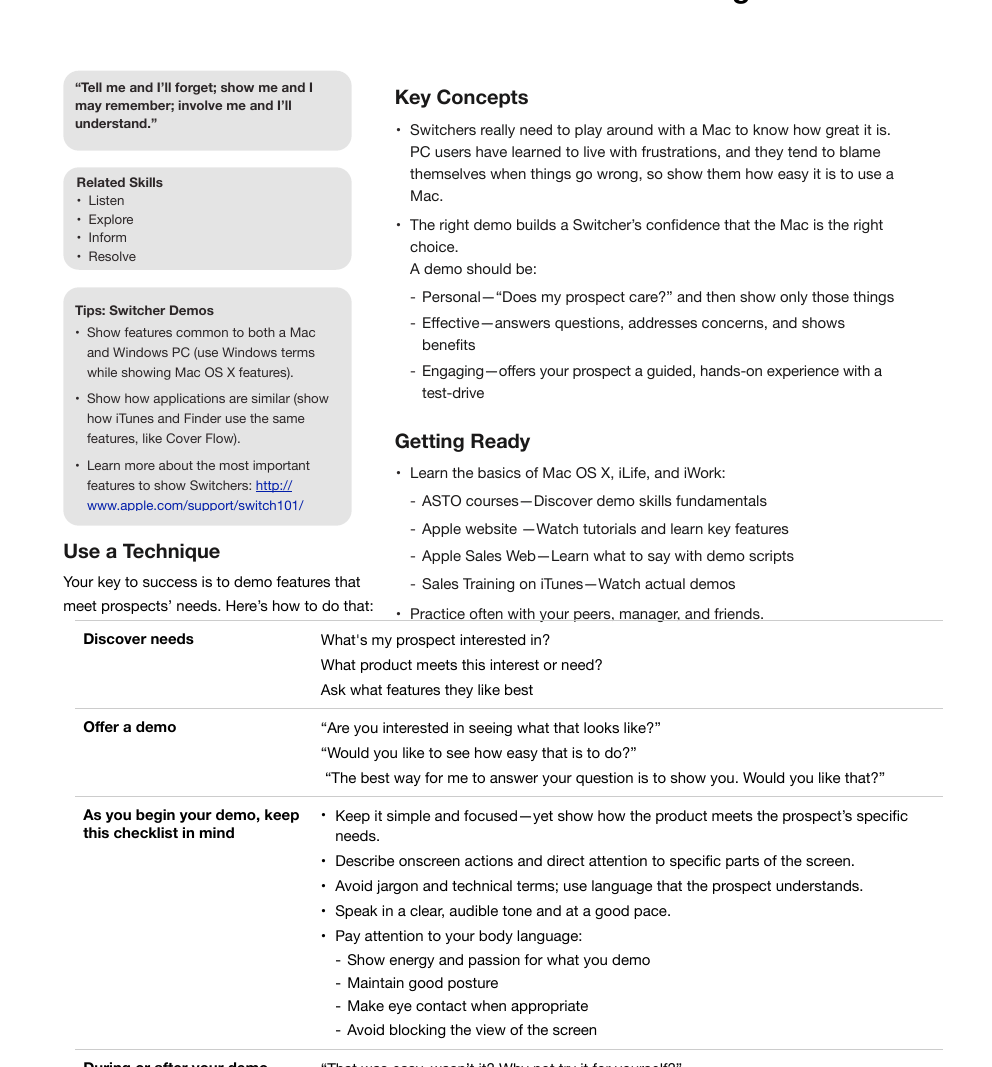
The fundamentals, in evidence
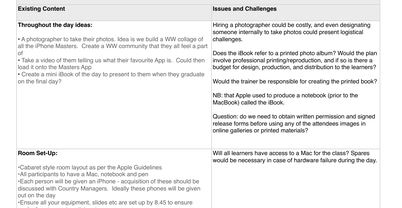
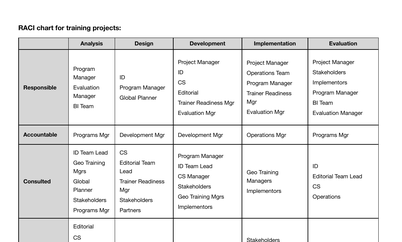
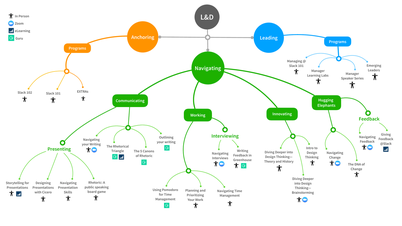
The AI systems and the programs in this portfolio rest on ordinary instructional-design discipline, and I’d rather show it than claim it. Below are excerpts from real working documents, in process order: a content analysis for a product masters workshop, a design document for a sales training course, a development playbook with a RACI, a course-mapping deck, a test plan for a hands-on module, and a training evaluation survey design.